




You spend hours creating blog posts, attracting visitors, and building an audience. But once someone leaves your website, how do you keep that relationship going?
That’s one reason email marketing remains useful for bloggers and small businesses. It gives them a direct way to reach subscribers, share new content, and promote products without relying entirely on social media or search traffic.
And because email marketing platforms typically charge monthly or annual subscription fees, some companies offer affiliate programs that pay recurring commissions.
But there’s a catch: the program offering the highest commission isn’t necessarily the one that will earn you the most money.
A platform might pay generously but be too expensive or complicated for your readers. Another might offer a smaller commission but solve exactly the problem your audience is facing.
In this guide, we’ll compare 10 of the best email marketing affiliate programs for bloggers in 2026, including MailerLite, Kit, GetResponse, ActiveCampaign, and HubSpot.
You’ll learn how their affiliate programs work, which audiences they’re best suited for, and what to consider before joining. We’ll also look at realistic commission calculations and ways to promote these tools without needing a massive audience.
If you’re also comparing the software itself, explore our guide to the best email marketing software for small businesses.
Why Email Marketing Affiliate Programs Are Worth Promoting

Email marketing affiliate programs can be an attractive way for bloggers to earn income because they promote tools that businesses and content creators use regularly.
Unlike products that customers purchase only once, email marketing software is typically offered through monthly or annual subscriptions. Businesses use these platforms to manage subscribers, send newsletters, automate follow-ups, and communicate with customers.
For bloggers, this creates an opportunity to recommend software that solves a genuine problem while potentially earning commissions from successful referrals.
Affiliate disclosure: Some links in this article may be affiliate links. If you make a purchase or sign up through one of them, NaturesMoney may earn a commission at no additional cost to you.
1. Potential for Recurring Affiliate Commissions
One of the biggest advantages of promoting email marketing software is that some companies offer recurring affiliate commissions.
Some email marketing affiliate programs pay commissions each time a referred customer makes an eligible subscription payment. This can create repeat income from a single referral, although payments may stop when the customer cancels or reaches the end of the program’s commission period.
We’ll compare recurring and one-time commission structures later in this guide, along with examples of how affiliate earnings are calculated.
2. Strong Demand From Bloggers and Small Businesses
Email marketing tools serve a wide variety of audiences, including bloggers, freelancers, ecommerce store owners, coaches, consultants, and small businesses.
Many of these users need software for collecting email subscribers, building automated campaigns, and promoting products or services.
This creates opportunities to publish helpful articles targeting readers who are actively comparing email marketing platforms.
3. Opportunities to Earn From Evergreen Content
A well-written comparison article, software review, or beginner tutorial can continue attracting visitors through search engines long after publication.
For example, an article comparing MailerLite and Mailchimp could help readers choose between two platforms while introducing them to relevant affiliate offers.
However, software recommendations require regular updates because pricing, features, and affiliate terms change.
4. You Don’t Need a Huge Audience
A large audience can help, but targeted traffic is often more valuable than raw visitor numbers.
A blogger attracting 500 monthly visitors who are actively researching email marketing software may have better affiliate conversion opportunities than a website attracting thousands of visitors with little interest in business tools.
The key is matching the recommended software to the reader’s needs.
5. Multiple Ways to Promote Email Marketing Software
Email marketing affiliate programs can fit naturally into different types of content.
You can create detailed software reviews, comparison articles, beginner tutorials, email marketing guides, and case studies.
For example, instead of simply recommending an email platform, you could publish a tutorial explaining how to create a newsletter signup form using MailerLite.
Readers who find the tutorial useful may be more interested in trying the software themselves.
Best Email Marketing Affiliate Programs for Bloggers in 2026: Quick Comparison
The ten programs below serve different audiences and use different commission models. Some offer recurring payments, while others rely on one-time referral rewards or performance-based arrangements.
Use this table to narrow your choices, then review the individual programs for details about their products, commissions, and eligibility requirements.
| Affiliate Program | Commission Model | Commission Duration | Best For |
|---|---|---|---|
| MailerLite | 30% recurring | Lifetime of eligible subscription | Beginner bloggers and small businesses |
| Kit | 50% recurring initially; possible 10%–20% afterward | First 12 months; ongoing commissions for qualifying affiliates | Creators, newsletter publishers, and bloggers |
| GetResponse | Recurring or one-time commissions | Depends on selected affiliate arrangement; verify current terms | Bloggers, marketers, and online entrepreneurs |
| ActiveCampaign | Up to 30% recurring | Up to 12 months | Marketing agencies and business-focused bloggers |
| Brevo | Referral-based rewards | Per qualifying action; confirm current terms | Small businesses and budget-conscious audiences |
| AWeber | Recurring commissions; historically 30%–50% | Confirm current program terms | Beginner bloggers and newsletter creators |
| Moosend | Up to 40% recurring | Confirm current commission duration | Budget-focused software comparison websites |
| Omnisend | Advertised 20% recurring | Confirm current commission duration | Ecommerce bloggers and online store owners |
| Constant Contact | Historically one-time referral rewards | Per qualifying referral; confirm program availability | Local businesses and nonprofit audiences |
| HubSpot | Advertised 30% recurring | Up to 12 months | B2B bloggers and marketing professionals |
Important: Affiliate commission rates, payment durations, and eligibility requirements can change. Some programs offer lifetime recurring commissions, while others limit payments to the first 12 months or reward individual qualifying referrals. Always verify the latest commission structure, cookie duration, payout requirements, and promotional restrictions on each provider’s official affiliate page before applying.
1. MailerLite Affiliate Program — Best Overall for Bloggers
MailerLite is a practical starting point for bloggers who want to recommend email marketing software without overwhelming their readers. It combines newsletters, signup forms, landing pages, and automation in a platform designed to be approachable for smaller businesses.
Its recurring affiliate commission model is appealing, but the bigger advantage is that MailerLite fits naturally into tutorials about starting a newsletter or growing a blog’s email list.
MailerLite Affiliate Program Commission and Details
MailerLite advertises a 30% recurring commission on qualifying subscription payments made by referred customers.
Unlike programs that stop paying commissions after a fixed period, MailerLite promotes lifetime recurring commissions, meaning eligible referrals can continue generating commissions while their qualifying subscriptions remain active.
Key affiliate program details include:
- Commission rate: 30% recurring.
- Commission duration: Lifetime of the qualifying customer subscription, subject to program terms.
- Cookie duration: 45 days.
- Product: Email marketing software, landing pages, signup forms, and automation.
- Best audience: Bloggers, freelancers, newsletter creators, and small business owners.
For example, imagine you refer 25 customers who each subscribe to an eligible $25 monthly plan.
At a 30% commission rate, the potential earnings would be:
25 customers × $25 × 30% = $187.50 per month.
If all 25 customers maintained the same qualifying subscriptions for an entire year, that would represent $2,250 in potential annual affiliate commissions.
This is a hypothetical calculation. Actual commissions depend on successful referrals, customer retention, eligible payments, refunds, and MailerLite’s affiliate terms.
Why MailerLite Is Worth Promoting
One reason MailerLite stands out is its accessibility.
Many people searching for email marketing software are starting their first blog, launching a small business, or trying to grow an existing website.
They often want a platform that provides essential marketing tools without requiring advanced technical knowledge.
MailerLite addresses these needs through its newsletter editor, signup forms, landing pages, subscriber management, and automation features.
A WordPress tutorial showing how to connect a MailerLite signup form gives readers a practical reason to explore the platform.
Best Ways to Promote MailerLite
Instead of placing affiliate links in unrelated articles, focus on content that helps readers solve a specific problem.
Some promising article topics include:
- MailerLite Review: Is It Worth Using in 2026?
- MailerLite vs. Mailchimp: Which Is Better for Beginners?
- How to Create an Email Newsletter With MailerLite
- How to Add a MailerLite Signup Form to WordPress
- Best Email Marketing Software for New Bloggers
- How to Build an Automated Welcome Email Sequence
These topics attract readers who may already be interested in choosing or using an email marketing platform.
Detailed tutorials with original screenshots, practical examples, and honest explanations of limitations can also help establish credibility.
MailerLite Affiliate Program Pros and Cons
Advantages
- Recurring commissions rather than only one-time referral payments.
- Software suitable for beginners and small businesses.
- Multiple content opportunities, including tutorials and comparisons.
- Free plan allows prospective customers to explore the platform.
- Broad appeal across blogging, freelancing, and entrepreneurship audiences.
Limitations
- Free users do not generate paid subscription commissions.
- Affiliate earnings depend on qualifying customer payments.
- Customers may cancel or downgrade their subscriptions.
- MailerLite’s smaller free-plan subscriber allowance may make competing platforms more appealing to some beginners.
- Program approval and promotional activities are subject to affiliate terms.
Who Should Join the MailerLite Affiliate Program?
MailerLite is particularly suitable for bloggers who publish content about starting websites, growing email lists, online marketing, WordPress, and small business tools.
It can also be a good fit for creators who regularly teach their audiences how to build newsletters or automate customer communication.
However, bloggers whose audiences are primarily interested in advanced enterprise marketing systems may find other programs more relevant.
Our Recommendation
MailerLite is our top choice for bloggers targeting beginners and small business owners. Its approachable email marketing tools and recurring commission structure make it a strong starting point, particularly for websites publishing newsletter tutorials and WordPress guides.
Official Affiliate Program: https://www.mailerlite.com/affiliate-program
Before applying, review the current program agreement, eligibility requirements, payout conditions, and promotional restrictions.
2. Kit Affiliate Program — Best for Content Creators and Newsletter Publishers
Kit, formerly ConvertKit, takes a creator-first approach to email marketing. Its tools are built around newsletters, audience growth, automation, and selling digital products.
That makes it particularly relevant for bloggers who write about content creation, online courses, newsletters, and earning money from an audience. If your readers are independent creators rather than traditional businesses, Kit deserves a closer look.
Kit Affiliate Program Commission and Details
Kit offers a commission structure that rewards affiliates for referring paying customers.
Its advertised affiliate program includes 50% recurring commissions for the first 12 months of an eligible referred customer’s subscription.
Qualifying affiliates may also earn ongoing commissions after the first year, depending on their affiliate tier and the program’s current requirements.
Key affiliate program details include:
- Commission rate: 50% recurring for the first 12 months.
- Long-term commissions: Potentially 10%–20% after the first year for qualifying affiliates.
- Commission type: Subscription-based recurring commissions.
- Cookie duration: Verify the current tracking period in Kit’s affiliate terms.
- Product: Email marketing, newsletters, landing pages, automation, and creator monetization tools.
- Best audience: Bloggers, content creators, coaches, authors, and newsletter publishers.
Because Kit offers different affiliate tiers and eligibility requirements, not every affiliate will qualify for the same long-term commission structure.
Always review the current agreement before estimating future earnings.
How Much Can You Earn With the Kit Affiliate Program?
Suppose you refer 15 customers who each pay $39 per month for an eligible Kit subscription. At a 50% recurring commission, those referrals could generate $292.50 per month, or $3,510 over 12 months if every customer remains eligible and subscribed.
However, Kit’s advertised 50% commission applies to the initial qualifying period. Earnings after the first year may decrease or end depending on your affiliate tier and the current program terms. These figures are hypothetical, not guaranteed earnings.
Why Kit Is Worth Promoting
One of Kit’s biggest advantages is its clear focus on creators.
Many bloggers eventually realize that attracting website traffic is only part of building an online business. They also need a way to stay connected with readers, promote new content, and develop relationships with potential customers.
Kit provides tools that support these goals.
Creators can build signup forms, design landing pages, organize subscribers using tags, and create automated email sequences.
The platform also supports monetization opportunities such as digital products and paid newsletters.
This makes Kit especially relevant to audiences interested in turning blogs, newsletters, and educational content into income-generating businesses.
Best Ways to Promote Kit
Kit is particularly well suited to educational blog content that helps readers grow and monetize their audiences.
Potential article topics include:
- Kit Review: Is It Worth It for Bloggers in 2026?
- Kit vs. MailerLite: Which Is Better for Content Creators?
- How to Start an Email Newsletter With Kit
- Best Email Marketing Software for Bloggers
- How to Grow Your Email List Without Paid Advertising
- How to Sell Digital Products Using Kit
- Kit vs. Mailchimp: Features, Pricing, and Automation Compared
These articles can attract readers who are actively looking for email marketing tools or researching ways to build an online business.
For example, a tutorial explaining how to create a newsletter signup form could naturally introduce Kit as one possible solution.
Including practical instructions, original screenshots, and realistic examples can make the recommendation more useful than a generic promotional article.
Kit Affiliate Program Pros and Cons
Advantages
- Attractive introductory recurring commission structure.
- Software specifically designed for creators and bloggers.
- Strong opportunities for tutorials, comparisons, and educational content.
- Free newsletter plan can help readers explore the platform.
- Relevant to audiences interested in blogging, digital products, and newsletter monetization.
Limitations
- The highest recurring commission rate applies only during the initial qualifying period.
- Ongoing commissions after the first year depend on affiliate eligibility.
- Free subscribers do not automatically generate paid subscription commissions.
- Paid plans may be expensive for beginners with limited budgets.
- Affiliate earnings depend on customer retention and qualifying payments.
Who Should Join the Kit Affiliate Program?
Kit is an excellent affiliate program to consider if your blog focuses on content creation, blogging, email newsletters, digital products, or online entrepreneurship.
It may be especially relevant for bloggers who teach readers how to launch websites, grow audiences, or monetize their expertise.
However, if your audience primarily consists of local businesses looking for inexpensive promotional newsletters, MailerLite or Brevo may be more appropriate recommendations.
Our Recommendation
Kit is our preferred option for audiences interested in newsletters, content creation, and digital products. Its creator-focused features give bloggers plenty of opportunities to publish practical tutorials, although the commission structure after the first year deserves careful attention.
Official Affiliate Program: https://kit.com/affiliate
Review Kit’s current affiliate terms, commission tiers, payment requirements, and promotional policies before applying.
3. GetResponse Affiliate Program — Best for Bloggers Promoting Email Marketing and Sales Funnels
GetResponse is worth exploring when your audience needs more than a basic newsletter tool. Alongside email campaigns, it offers landing pages, automation, and features designed to support lead generation and online sales.
For bloggers covering digital marketing or online entrepreneurship, this creates a natural connection between the problems readers want to solve and the software they might need.
GetResponse Affiliate Program Commission and Details
GetResponse has advertised different affiliate commission arrangements, including recurring and one-time referral rewards.
Because its affiliate offerings and promotional terms may vary, it’s important to confirm which commission structure is currently available when applying.
Depending on the applicable program, affiliates may have access to recurring subscription commissions or fixed payments for qualifying referrals.
Key affiliate program details include:
- Commission type: Recurring or one-time commissions, depending on the available program.
- Commission rate: Varies by affiliate arrangement and current promotional terms.
- Cookie duration: Confirm the tracking period for your selected program.
- Product: Email marketing, automation, landing pages, conversion funnels, and creator tools.
- Best audience: Bloggers, online entrepreneurs, digital marketers, coaches, and small businesses.
- Affiliate requirements: Subject to application approval and program policies.
GetResponse is particularly interesting for affiliates whose readers are building sales funnels or selling digital products. Before joining, compare the available commission arrangements and check whether referrals remain eligible when customers upgrade their subscriptions.
Why GetResponse Is Worth Promoting
GetResponse appeals to businesses that need more than basic email newsletters.
Its platform combines email campaigns, autoresponders, signup forms, landing pages, and marketing automation.
Depending on the subscription, users can also access advanced conversion tools and creator-oriented features.
This gives bloggers several opportunities to introduce GetResponse naturally within educational content.
For example, an article explaining how to create an automated lead generation funnel could demonstrate how a business collects email subscribers through a landing page and follows up with a series of messages.
A reader interested in implementing that process may be more likely to explore the recommended software.
Best Ways to Promote GetResponse
GetResponse fits particularly well into articles focused on online marketing, lead generation, and business automation.
Potential content ideas include:
- GetResponse Review: Features, Pricing, and Pros and Cons
- GetResponse vs. MailerLite: Which Is Better in 2026?
- GetResponse vs. ActiveCampaign: Automation Compared
- How to Build an Email Marketing Funnel With GetResponse
- Best Email Marketing Software for Online Courses
- How to Create Automated Email Campaigns for Small Businesses
- Best Landing Page and Email Marketing Tools
Detailed tutorials can be especially useful because they show readers how the software works in practical situations.
For stronger affiliate content, include original screenshots, explain setup steps, discuss pricing limitations, and identify situations where another platform might be more suitable.
GetResponse Affiliate Program Pros and Cons
Advantages
- Multiple email marketing and lead generation features to promote.
- Relevant to bloggers, digital marketers, and online entrepreneurs.
- Opportunities to create tutorials, reviews, and software comparisons.
- Potential access to recurring or one-time commission arrangements.
- Suitable for audiences interested in marketing automation and sales funnels.
Limitations
- Commission terms can differ between affiliate arrangements.
- Some advanced product features require more expensive subscriptions.
- Beginners may find the platform more complex than basic newsletter tools.
- Affiliate income depends on successful qualifying referrals.
- The software may be unnecessary for readers who only want occasional email newsletters.
Who Should Join the GetResponse Affiliate Program?
GetResponse is worth considering if your website publishes content about online business tools, digital marketing, lead generation, marketing automation, or selling digital products.
It can be particularly relevant for bloggers whose readers are building businesses that depend on automated customer communication.
However, bloggers targeting complete beginners may find that simpler email platforms are easier to introduce.
Official Affiliate Program: https://www.getresponse.com/affiliate-programs
Check the current affiliate commission options, tracking terms, payout requirements, and promotional restrictions before joining.
4. ActiveCampaign Affiliate Program — Best for Bloggers Promoting Marketing Automation
ActiveCampaign is aimed at businesses that want to do more with their customer data. Rather than sending the same message to every subscriber, users can build automated workflows based on customer behavior and engagement.
It’s a stronger fit for audiences interested in advanced marketing automation than for beginners who simply want to send an occasional newsletter.
ActiveCampaign Affiliate Program Commission and Details
ActiveCampaign advertises a recurring affiliate commission structure that can reward partners for referring qualifying paying customers.
Its published affiliate offer includes 30% recurring commissions for up to 12 months on eligible referrals, subject to the current program agreement.
Key affiliate program details include:
- Commission rate: Up to 30% recurring.
- Commission duration: Up to 12 months for qualifying referrals.
- Commission type: Subscription-based affiliate commissions.
- Cookie duration: Verify the current tracking period in the affiliate agreement.
- Product: Email marketing, marketing automation, segmentation, and customer engagement tools.
- Best audience: Marketing professionals, agencies, consultants, and growing small businesses.
- Affiliate requirements: Application approval and compliance with program policies.
One important detail is the commission period. ActiveCampaign’s advertised recurring payments are limited to a qualifying period rather than continuing indefinitely. That makes it especially important to consider the value of each referral over time, not just the advertised percentage.
Why ActiveCampaign Is Worth Promoting
ActiveCampaign stands out because of its emphasis on marketing automation.
Many businesses begin with basic email newsletters but eventually need more sophisticated systems for managing customer communication.
For example, a consulting company might want to send different follow-up messages depending on which services a prospective customer is interested in.
An ecommerce business may want to automate messages based on customer purchases, browsing activity, or engagement.
ActiveCampaign provides tools for building these types of workflows.
An article showing how to automate follow-up emails for a consulting business would give readers a practical example of when ActiveCampaign’s advanced features are useful.
These readers may have stronger commercial intent than visitors casually exploring free newsletter software.
Best Ways to Promote ActiveCampaign
ActiveCampaign is particularly suitable for detailed software comparisons, automation tutorials, and business marketing guides.
Potential article topics include:
- ActiveCampaign Review: Is It Worth the Price in 2026?
- ActiveCampaign vs. Mailchimp: Which Is Better?
- ActiveCampaign vs. GetResponse: Features and Pricing Compared
- Best Email Marketing Automation Software for Small Businesses
- How to Create Automated Email Follow-Up Sequences
- Best CRM and Email Marketing Software
- How to Build a Lead Nurturing Campaign
- Marketing Automation Examples for Small Businesses
Articles explaining specific automation workflows can be especially valuable.
For example, a tutorial could demonstrate how a service business creates an automated welcome sequence, segments new leads, and follows up based on subscriber activity.
The goal is to help readers understand whether ActiveCampaign’s additional capabilities justify its cost.
ActiveCampaign Affiliate Program Pros and Cons
Advantages
- Recurring commission opportunity for qualifying referrals.
- Strong relevance to business and marketing-focused audiences.
- Advanced automation features provide opportunities for detailed tutorials.
- Suitable for comparison articles targeting commercially motivated readers.
- Subscription-based software may encourage longer-term customer relationships.
Limitations
- Recurring commissions are limited to the eligible commission period.
- Advanced software features may require more expensive plans.
- The platform can be more complicated than beginner-focused alternatives.
- Not every small business needs sophisticated automation.
- Affiliate earnings depend on qualifying subscriptions and customer retention.
Who Should Join the ActiveCampaign Affiliate Program?
ActiveCampaign is particularly relevant for bloggers who publish content about marketing automation, customer relationship management, lead generation, digital marketing, and business software.
It may also be a good fit for websites serving marketing agencies, consultants, and established small businesses.
However, if your audience primarily consists of beginner bloggers looking for free email marketing tools, MailerLite or Kit may be more suitable recommendations.
Official Affiliate Program: https://www.activecampaign.com/partners/affiliate
Before applying, verify the current commission rate, cookie duration, payout conditions, and affiliate marketing restrictions.
5. Brevo Affiliate Program — Best for Bloggers Promoting Affordable Email Marketing Software
Brevo appeals to small businesses that want email marketing without committing to an expensive platform from day one. Its pricing approach, which places significant emphasis on email sending volume, can be attractive for businesses with different mailing needs.
For bloggers covering affordable business software, Brevo provides a useful alternative to platforms that primarily price plans around subscriber counts.
Brevo Affiliate Program Commission and Details
Brevo offers an affiliate program that rewards partners for referring eligible customers to its platform.
Historically, Brevo has advertised referral rewards for qualifying free account registrations and additional commissions when referred customers purchase paid subscriptions. However, the exact commission amounts and eligibility conditions can change.
Key affiliate program details include:
- Commission structure: Referral-based rewards for qualifying registrations or paid conversions, depending on current program terms.
- Commission rate: Verify the current offer in Brevo’s affiliate portal.
- Commission duration: Depends on the applicable affiliate agreement.
- Cookie duration: Confirm the current tracking window.
- Product: Email marketing, marketing automation, transactional emails, and customer communication tools.
- Best audience: Small business owners, freelancers, startups, and budget-conscious entrepreneurs.
- Affiliate requirements: Subject to program approval and promotional policies.
Brevo’s referral structure deserves a closer look because qualifying account registrations and paid conversions may be rewarded differently. Check which actions currently earn commissions before planning content around free account signups.
Why Brevo Is Worth Promoting
Brevo’s biggest advantage for affiliate marketers is its appeal to cost-conscious businesses.
Many entrepreneurs want to start email marketing but hesitate to commit to expensive monthly subscriptions.
Brevo offers a free plan with a daily sending allowance, making it possible for beginners to explore the platform before purchasing a paid subscription.
The software also provides features that can support businesses as their marketing needs grow.
These include email campaigns, contact management, marketing automation, transactional email capabilities, and integrations with popular website and ecommerce platforms.
Brevo fits particularly well into comparisons for startups and small businesses that need to balance email sending limits, contact storage, and monthly costs.
Best Ways to Promote Brevo
Brevo fits naturally into content about email marketing, affordable business software, and marketing automation.
Potential article topics include:
- Brevo Review: Features, Pricing, and Pros and Cons
- Brevo vs. Mailchimp: Which Is Better in 2026?
- Brevo vs. MailerLite: Best Budget Email Marketing Platform
- Best Free Email Marketing Software for Small Businesses
- How to Start Email Marketing on a Budget
- How to Create an Email Campaign With Brevo
- Best Email Marketing Tools for WordPress
- Affordable Marketing Automation Software for Startups
Comparison articles can be particularly useful because readers often want to understand how Brevo’s sending limits, contact allowances, and automation features compare with competing platforms.
A practical tutorial explaining how to connect Brevo to a WordPress website could also attract readers interested in using the software.
Brevo Affiliate Program Pros and Cons
Advantages
- Appeals to small businesses looking for affordable marketing software.
- Free plan can encourage readers to explore the platform.
- Multiple opportunities for tutorials and software comparisons.
- Offers email marketing, transactional email, and automation capabilities.
- Relevant to bloggers covering WordPress, entrepreneurship, and small business tools.
Limitations
- Affiliate commission terms must be confirmed before promotion.
- Free account registrations may not always qualify for payouts.
- Advanced marketing features require paid subscriptions.
- Contact storage and sending limits can affect the software’s overall value.
- Some businesses may prefer platforms with simpler subscriber-based pricing.
Who Should Join the Brevo Affiliate Program?
Brevo is particularly suitable for bloggers whose audiences include freelancers, startups, local businesses, and entrepreneurs looking for affordable email marketing solutions.
It can also be relevant to WordPress-focused websites that publish tutorials about contact forms, email newsletters, and customer communication.
However, bloggers primarily targeting professional creators or businesses requiring sophisticated automation may find Kit or ActiveCampaign more suitable.
Affiliate Program Information: https://www.brevo.com/affiliates/
Review the current affiliate terms, commission rates, cookie duration, and payment requirements before joining.
6. AWeber Affiliate Program — Best for Bloggers and Beginners Building Email Lists
AWeber has been part of the email marketing industry for years, with tools for building subscriber lists, creating newsletters, and automating basic campaigns.
It’s a relevant option for bloggers teaching beginners how to start an email list, especially when comparing established newsletter platforms with newer alternatives.
AWeber Affiliate Program Commission and Details
AWeber operates a customer referral program that rewards eligible partners when referred customers purchase qualifying subscriptions.
The company has advertised recurring referral commissions, with rates that may increase based on the number of qualifying customers referred.
Its published commission structure has included rates ranging from 30% to 50% recurring, depending on referral performance and program eligibility.
Key affiliate program details include:
- Commission rate: Historically advertised at 30%–50% recurring, depending on qualification.
- Commission type: Recurring subscription commissions.
- Commission duration: Subject to the current customer referral agreement.
- Cookie duration: Verify the current referral tracking period.
- Product: Email newsletters, subscriber management, landing pages, signup forms, and email automation.
- Best audience: Beginner bloggers, entrepreneurs, newsletter creators, and small businesses.
- Affiliate requirements: Compliance with AWeber’s referral program terms.
AWeber’s advertised referral rates have included different commission tiers. If you’re just starting out, base your expectations on the entry-level rate rather than the highest percentage available to established affiliates.
Why AWeber Is Worth Promoting
AWeber addresses a common challenge for new bloggers: building an email audience without needing extensive technical knowledge.
Bloggers can use email marketing to notify subscribers about new articles, share useful resources, and promote relevant products or services.
AWeber provides tools for creating signup forms, organizing subscribers, designing newsletters, and automating email sequences.
These capabilities make the platform relevant to educational content about starting a blog or growing an online business.
Another advantage for affiliates is that AWeber can be introduced naturally within practical tutorials.
For example, a blogger writing about how to create a newsletter could explain the process using AWeber and include an affiliate link where appropriate.
Best Ways to Promote AWeber
AWeber is particularly suitable for beginner-focused blogging tutorials and email marketing comparisons.
Potential article topics include:
- AWeber Review: Is It Worth Using in 2026?
- AWeber vs. MailerLite: Which Is Better for Beginners?
- AWeber vs. Mailchimp: Features and Pricing Compared
- How to Start an Email Newsletter With AWeber
- How to Add an AWeber Signup Form to WordPress
- Best Email Marketing Software for New Bloggers
- How to Build an Email List From Scratch
- How to Create an Automated Welcome Email Sequence
Detailed tutorials can be more valuable than promotional articles because they help readers understand how the software works before making a purchasing decision.
When possible, include original screenshots, explain potential limitations, and compare AWeber with alternative platforms.
AWeber Affiliate Program Pros and Cons
Advantages
- Recurring commission opportunities for qualifying referrals.
- Established email marketing platform.
- Relevant to bloggers and small business audiences.
- Suitable for educational tutorials and comparison articles.
- Potential for higher commission tiers based on referral performance.
Limitations
- Higher commission rates may require meeting performance thresholds.
- Affiliate earnings depend on qualifying subscription payments.
- Some competitors offer different free-plan allowances or lower-cost entry-level options.
- Businesses requiring advanced automation may prefer specialized platforms.
- Commission terms and referral eligibility can change.
Who Should Join the AWeber Affiliate Program?
AWeber is worth considering for bloggers who publish content about starting websites, growing email lists, WordPress, newsletters, and online business tools.
It may be especially relevant for websites that attract beginners searching for straightforward email marketing guidance.
However, bloggers targeting advanced marketing teams or ecommerce businesses may find that other platforms better match their audiences.
Official Customer Referral Program: https://www.aweber.com/advocates.htm
Review the current referral agreement, commission tiers, tracking period, and payout requirements before applying.
7. Moosend Affiliate Program — Best for Bloggers Promoting Affordable Email Automation
Moosend is an option for businesses that want email automation and subscriber segmentation without immediately moving to a more complex marketing platform.
Its combination of newsletter creation, automated workflows, and landing page tools makes it relevant to bloggers writing about affordable marketing software.
Moosend Affiliate Program Commission and Details
Moosend has promoted a recurring affiliate commission structure, with advertised commissions of up to 40% on qualifying customer payments.
The exact commission rate, eligibility requirements, and payment conditions depend on the current affiliate agreement.
Key affiliate program details include:
- Commission rate: Up to 40% recurring, subject to current program terms.
- Commission type: Subscription-based affiliate commissions.
- Commission duration: Verify whether commissions continue for the customer’s eligible subscription lifetime.
- Cookie duration: Confirm the current referral tracking period.
- Product: Email marketing, automation, landing pages, signup forms, and subscriber segmentation.
- Best audience: Small business owners, bloggers, startups, and budget-conscious marketers.
- Affiliate requirements: Application approval and compliance with promotional policies.
Moosend’s advertised commission percentage looks competitive, but the maximum rate shouldn’t be your only consideration. Check whether it applies to new affiliates, how long qualifying payments continue, and what happens if a referred customer changes plans.
Why Moosend Is Worth Promoting
Moosend’s appeal comes from its combination of email marketing and automation capabilities.
Small businesses often want to create professional newsletters, capture leads, and automate customer communication without spending heavily on software.
Moosend offers tools that support these activities, including a drag-and-drop email editor, customizable templates, audience segmentation, and automated workflows.
A Moosend tutorial could walk readers through creating a welcome sequence, segmenting subscribers, or setting up an automated follow-up campaign.
For example, a tutorial about setting up an automated welcome sequence could demonstrate how Moosend helps a business communicate with new subscribers.
A comparison article could also explain how Moosend differs from more recognizable alternatives such as Mailchimp or MailerLite.
Best Ways to Promote Moosend
Moosend is particularly relevant to articles targeting readers looking for affordable email marketing and automation tools.
Potential article topics include:
- Moosend Review: Features, Pricing, and Pros and Cons
- Moosend vs. Mailchimp: Which Is Better in 2026?
- Moosend vs. MailerLite: Email Marketing Compared
- Best Affordable Email Marketing Software for Small Businesses
- How to Create Automated Email Campaigns With Moosend
- Best Email Marketing Automation Tools for Beginners
- How to Build an Email List for a Small Business
- Best Newsletter Software for WordPress Websites
For stronger affiliate content, include practical examples, original screenshots, and comparisons that explain when Moosend is a good choice and when another provider may offer better value.
Moosend Affiliate Program Pros and Cons
Advantages
- Attractive advertised recurring commission opportunity.
- Email marketing and automation features suitable for small businesses.
- Relevant to budget-conscious entrepreneurs.
- Multiple opportunities for software reviews and comparison articles.
- Subscription-based product with potential for repeat qualifying payments.
Limitations
- Maximum advertised commission rates may have eligibility conditions.
- Moosend has less brand recognition than some competitors.
- Referral earnings depend on customer retention and qualifying payments.
- Certain features may require higher subscription levels.
- Affiliate terms and tracking conditions should be verified before promotion.
Who Should Join the Moosend Affiliate Program?
Moosend is worth considering for bloggers who focus on affordable business software, email marketing automation, entrepreneurship, and digital marketing tools.
It may also be suitable for WordPress-focused websites that publish tutorials about collecting subscribers and managing newsletters.
However, bloggers whose audiences prioritize well-known platforms or highly specialized ecommerce functionality may find other programs more relevant.
Official Affiliate Program: https://moosend.com/affiliate-program/
Check the current commission rates, cookie duration, payout requirements, and affiliate terms before joining.
8. Omnisend Affiliate Program — Best for Bloggers Targeting Ecommerce Businesses
Omnisend is built for ecommerce businesses, and that specialization is its biggest selling point. Online stores can use it to send campaigns, recover abandoned carts, and follow up with customers after purchases.
If your readers use Shopify or WooCommerce, Omnisend may be more relevant than a general-purpose newsletter platform.
Omnisend Affiliate Program Commission and Details
Omnisend has advertised a recurring affiliate commission structure that rewards partners for referring qualifying paying customers.
Its affiliate program has promoted 20% recurring commissions, although the applicable commission period, eligibility requirements, and other conditions should be confirmed before publishing promotional claims.
Key affiliate program details include:
- Commission rate: Advertised at 20% recurring, subject to current program terms.
- Commission type: Subscription-based affiliate commissions.
- Commission duration: Confirm the current recurring payment period.
- Cookie duration: Verify the current referral tracking window.
- Product: Ecommerce email marketing, SMS marketing, automation, segmentation, and customer retention tools.
- Best audience: Ecommerce bloggers, Shopify and WooCommerce website owners, and online retailers.
- Affiliate requirements: Subject to application approval and program policies.
With Omnisend, the audience matters as much as the commission. A store owner already using Shopify or WooCommerce may have a clear reason to explore its ecommerce automation features. Someone running a personal newsletter probably won’t. Keep that distinction in mind when deciding where to promote it.
Why Omnisend Is Worth Promoting
Omnisend stands out because it addresses marketing challenges that are particularly important to ecommerce businesses.
Online retailers often need more than a basic newsletter platform.
They may want to remind shoppers about abandoned carts, send personalized product recommendations, follow up after purchases, and encourage existing customers to return.
Omnisend provides tools designed for these activities.
Its ecommerce integrations allow businesses to connect marketing campaigns with customer information and shopping behavior.
An Omnisend vs. Klaviyo comparison, for example, could help Shopify store owners understand the differences in automation, pricing, and ecommerce integrations.
Best Ways to Promote Omnisend
Omnisend is particularly suitable for ecommerce-focused tutorials, software comparisons, and customer retention guides.
Potential article topics include:
- Omnisend Review: Is It Worth Using in 2026?
- Omnisend vs. Klaviyo: Which Is Better for Ecommerce?
- Omnisend vs. Mailchimp: Features and Pricing Compared
- Best Email Marketing Software for Shopify Stores
- Best Email Marketing Tools for WooCommerce
- How to Create Abandoned Cart Emails With Omnisend
- Best Ecommerce Marketing Automation Software
- How to Increase Repeat Purchases With Email Marketing
A practical article explaining how to create an abandoned cart recovery sequence can be particularly relevant to readers considering ecommerce marketing software.
Original screenshots, realistic examples, and clear explanations of pricing limitations can help readers decide whether Omnisend is appropriate for their stores.
Omnisend Affiliate Program Pros and Cons
Advantages
- Ecommerce-focused software with a clearly defined target audience.
- Recurring commission opportunities for qualifying referrals.
- Useful integrations with popular ecommerce platforms.
- Multiple opportunities for tutorials and software comparisons.
- Marketing automation features designed around customer purchasing behavior.
Limitations
- Less relevant to bloggers and businesses that don’t sell products online.
- Affiliate commissions depend on qualifying paid subscriptions.
- Free users do not automatically generate paid subscription commissions.
- SMS features and sending allowances may vary by subscription plan.
- Commission duration and other affiliate terms should be verified before promotion.
Who Should Join the Omnisend Affiliate Program?
Omnisend is particularly suitable for bloggers who publish content about ecommerce platforms, Shopify, WooCommerce, online store management, and digital marketing.
It may also be relevant to websites that teach entrepreneurs how to launch online stores or improve customer retention.
However, bloggers whose readers primarily want to build newsletters or personal brands may find Kit or MailerLite more appropriate.
Official Affiliate Program: https://www.omnisend.com/affiliates/
Review the current commission structure, cookie duration, payout requirements, and promotional policies before joining.
9. Constant Contact Affiliate Program — Referral Opportunities for Local Business and Nonprofit Audiences
Constant Contact focuses on the everyday marketing needs of small businesses and organizations. A local retailer might use it to announce promotions, while a nonprofit could send updates to donors and volunteers.
Its practical use cases make it relevant to local business and nonprofit audiences. However, confirm that an appropriate affiliate or referral program is currently available before promoting it as an earning opportunity.
Constant Contact Affiliate Program Commission and Details
Constant Contact has offered affiliate and referral arrangements that reward partners for introducing eligible customers to its marketing platform.
Historically, its affiliate program has advertised fixed referral commissions for qualifying trial registrations and paid customer conversions.
However, affiliate availability, payout amounts, and eligibility requirements can change, and some partnership opportunities may operate through separate programs.
Key affiliate program details include:
- Commission structure: One-time referral rewards or other partner-specific compensation, depending on the available program.
- Commission rate: Verify the current payout for qualifying referrals.
- Commission type: Generally referral-based rather than lifetime recurring commissions.
- Cookie duration: Confirm the current tracking period.
- Product: Email marketing, newsletters, contact management, signup forms, and marketing automation.
- Best audience: Local businesses, professional service providers, nonprofits, and community organizations.
- Affiliate requirements: Subject to current program availability, approval, and promotional policies.
Before building affiliate content around Constant Contact, confirm which referral or partnership opportunities are currently open to publishers. Its historical commission arrangements shouldn’t be treated as a guaranteed offer, especially if you’re comparing it with programs that publicly advertise recurring payments.
Why Constant Contact Is Worth Promoting
Constant Contact appeals to businesses and organizations that need practical tools for communicating with customers, members, or supporters.
A local restaurant might use email campaigns to announce seasonal promotions or special events.
A fitness studio could send newsletters about new classes, membership offers, and upcoming activities.
A nonprofit organization might communicate with donors, volunteers, and community members.
These are straightforward marketing needs that don’t necessarily require complex customer journey automation.
A guide to creating a restaurant newsletter or promoting nonprofit fundraising events would provide a practical setting for discussing Constant Contact.
Best Ways to Promote Constant Contact
Constant Contact fits naturally into articles about small business email marketing, nonprofit communication, and local business promotion.
Potential article topics include:
- Constant Contact Review: Features, Pricing, and Pros and Cons
- Constant Contact vs. Mailchimp: Which Is Better in 2026?
- Constant Contact vs. MailerLite: Small Business Email Marketing Compared
- Best Email Marketing Software for Local Businesses
- Best Email Marketing Platforms for Nonprofits
- How to Create a Newsletter for a Small Business
- Email Marketing Ideas for Restaurants and Retail Stores
- How to Promote Local Events With Email Marketing
Practical guides can be particularly effective because they help business owners understand how email marketing fits into their daily operations.
For example, an article explaining how a local business can build a customer newsletter could introduce Constant Contact as one possible solution.
Constant Contact Affiliate Program Pros and Cons
Advantages
- Established brand serving small businesses and organizations.
- Relevant to local marketing and nonprofit audiences.
- Multiple opportunities for educational tutorials and comparisons.
- Practical marketing features for businesses without dedicated marketing teams.
- Potential referral rewards for qualifying customer conversions.
Limitations
- Current affiliate program availability and commission terms require verification.
- One-time commissions may offer less long-term earning potential than recurring programs.
- Subscription costs increase with contact volume and required features.
- Advanced automation capabilities may require higher-priced plans.
- Some competing platforms offer more affordable options for basic newsletters.
Who Should Join the Constant Contact Affiliate Program?
Constant Contact is worth evaluating for bloggers who publish content about local business marketing, nonprofit management, entrepreneurship, and customer communication.
It may be particularly relevant for websites serving small business owners who want straightforward marketing tools rather than sophisticated automation platforms.
However, bloggers focused on recurring affiliate income may prefer to prioritize programs such as MailerLite or Kit, depending on their audiences and the current commission terms.
Official Website: https://www.constantcontact.com/
Review Constant Contact’s current partner and affiliate opportunities through its official website before applying.
10. HubSpot Affiliate Program — Best for Bloggers Targeting B2B Marketing and CRM Software
HubSpot is more than an email marketing platform. It brings together CRM, marketing, sales, and customer service tools, making it relevant to businesses that want to manage several parts of their customer relationships in one place.
For bloggers covering B2B software, lead generation, or business growth, HubSpot offers a broader range of content opportunities than a standalone newsletter service.
HubSpot Affiliate Program Commission and Details
HubSpot offers an affiliate program that rewards eligible partners for referring customers who purchase qualifying HubSpot products.
The program has advertised 30% recurring commissions for up to one year, with additional benefits or incentives potentially available to qualifying affiliates.
However, commission eligibility, payout conditions, and affiliate tiers are governed by the current program agreement.
Key affiliate program details include:
- Commission rate: Advertised at 30% recurring for qualifying referrals.
- Commission duration: Up to 12 months.
- Commission type: Subscription-based affiliate commissions.
- Cookie duration: Historically advertised at 180 days; confirm current terms.
- Product: CRM, email marketing, sales software, marketing automation, and customer service tools.
- Best audience: B2B bloggers, marketing professionals, consultants, agencies, and growing small businesses.
- Affiliate requirements: Application approval and compliance with HubSpot’s affiliate policies.
HubSpot’s affiliate program should not be confused with its Solutions Partner Program, which has different eligibility requirements and commercial arrangements.
Check HubSpot’s current affiliate agreement for eligible subscriptions, commission duration, and payout requirements.
How Much Can You Earn With the HubSpot Affiliate Program?
HubSpot offers products at different subscription levels, so the potential value of a referral can vary considerably.
For example, imagine you refer 10 customers who each purchase an eligible HubSpot subscription costing $100 per month.
Assuming a 30% recurring commission, your potential monthly earnings would be:
10 customers × $100 × 30% = $300 per month.
If all 10 customers maintained eligible subscriptions for 12 months, the potential total would be:
$300 × 12 = $3,600 in affiliate commissions.
This is a hypothetical example, not a guaranteed HubSpot payout or a representation of a specific current subscription price.
Actual commissions depend on qualifying products, customer payments, refunds, cancellations, and the applicable affiliate terms.
Since HubSpot’s advertised recurring commission period is limited, affiliates should not assume that commissions will continue indefinitely.
Why HubSpot Is Worth Promoting
HubSpot stands out because its software addresses several business needs beyond email marketing.
A small consulting company might use HubSpot to organize leads, manage customer information, and track sales opportunities.
A marketing agency could use its tools to coordinate campaigns and monitor prospect activity.
A growing service business might connect website forms, email communication, and sales follow-ups within the same system.
You can introduce HubSpot in a CRM comparison, explain its automation features in a marketing tutorial, or show small business owners how to organize and follow up with leads.
Instead of limiting promotional content to email marketing comparisons, affiliates can also create educational guides about CRM software, lead generation, marketing automation, and customer management.
Because HubSpot combines email marketing with customer relationship management, it’s also worth comparing it with the platforms featured in our best CRM software for small businesses guide.
Best Ways to Promote HubSpot
HubSpot is particularly suitable for business software comparisons, CRM tutorials, and marketing automation guides.
Potential article topics include:
- HubSpot Review: Is It Worth Using in 2026?
- HubSpot vs. Zoho CRM: Which Is Better for Small Businesses?
- HubSpot vs. ActiveCampaign: Marketing Automation Compared
- Best CRM Software for Small Businesses
- Best Free CRM Software for Startups
- How to Use HubSpot CRM for Lead Management
- Best Email Marketing and CRM Software
- How to Automate Sales Follow-Ups With HubSpot
These topics can attract readers who are actively evaluating business software.
For example, a comparison between HubSpot and Zoho CRM could help readers understand the differences in pricing, features, and suitability for their businesses.
When creating affiliate content, explain which HubSpot features are available for free and which require paid subscriptions.
This helps readers make informed purchasing decisions.
HubSpot Affiliate Program Pros and Cons
Advantages
- Recognized brand in CRM and marketing software.
- Recurring commission opportunities for qualifying referrals.
- Broad range of business software products to promote.
- Relevant to commercially focused B2B audiences.
- Opportunities for detailed software comparisons and educational tutorials.
- Free CRM tools can introduce prospective customers to the platform.
Limitations
- Recurring commissions are limited to the eligible commission period.
- Advanced HubSpot subscriptions can be expensive for smaller businesses.
- The platform may be unnecessarily complex for readers who only need basic email newsletters.
- Free users do not automatically generate paid subscription commissions.
- Affiliate earnings depend on qualifying purchases and program requirements.
For readers who aren’t ready to invest in a paid platform, our comparison of the best free CRM software explores alternatives for managing leads and customer relationships.
Who Should Join the HubSpot Affiliate Program?
HubSpot is particularly suitable for bloggers who publish content about business software, CRM platforms, digital marketing, sales automation, and entrepreneurship.
It may also be a good fit for websites serving consultants, agencies, B2B service providers, and growing companies.
However, bloggers whose readers primarily want inexpensive newsletter software may find MailerLite, Brevo, or Kit more relevant.
Our Recommendation
HubSpot is worth prioritizing for blogs serving established small businesses, consultants, and B2B audiences. Its combination of CRM, marketing, and sales tools supports more specialized content than a basic newsletter platform, although its pricing and complexity won’t suit every reader.
Official Affiliate Program: https://www.hubspot.com/partners/affiliates
Review the current commission structure, cookie duration, payout requirements, and promotional restrictions before applying.
Recurring vs. One-Time Affiliate Commissions: Which Is Better for Bloggers?
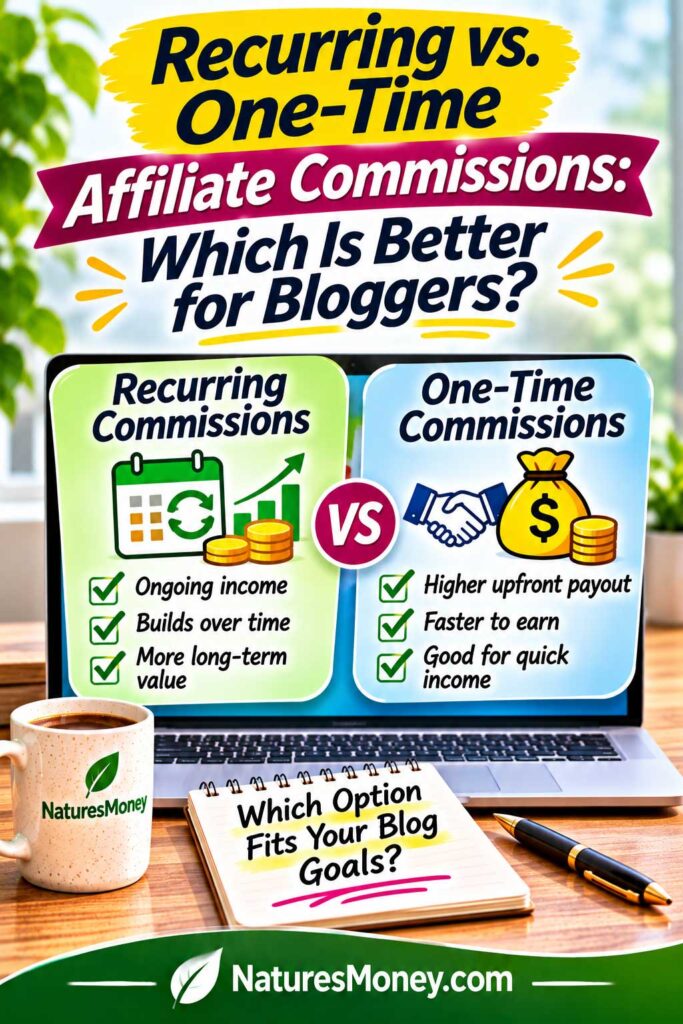
When comparing the best email marketing affiliate programs for bloggers, one of the most important factors to consider is how commissions are paid.
Some affiliate programs provide a one-time payment when a referred customer purchases a subscription. Others offer recurring commissions for a specific period or for as long as the customer maintains an eligible paid account.
Both models can be profitable, but they work differently and offer distinct advantages depending on your website’s audience, traffic, and monetization strategy.
Understanding these differences can help you choose affiliate programs that align with your long-term income goals.
What Are Recurring Affiliate Commissions?
Recurring affiliate commissions allow you to earn multiple payments from a qualifying customer referral.
Instead of receiving a single commission when someone purchases a subscription, you may continue earning a percentage of their eligible payments.
For example, imagine you promote email marketing software that costs $40 per month and offers a 30% recurring commission.
Each qualifying customer could generate:
$40 × 30% = $12 per month.
If you refer 25 customers who maintain their subscriptions, your potential monthly earnings would be:
25 customers × $12 = $300 per month.
Over 12 months, that could generate $3,600 in affiliate commissions, assuming all customers remain subscribed and the program pays commissions throughout the entire period.
However, not all recurring affiliate programs offer lifetime payments.
Some limit commissions to the first 12 months, while others may provide ongoing commissions subject to eligibility requirements.
Always verify the commission duration before joining.
What Are One-Time Affiliate Commissions?
One-time affiliate programs pay a fixed amount or percentage when a referred customer completes a qualifying action.
For example, an email marketing company might offer a hypothetical $75 commission when a new customer purchases an eligible subscription.
If you refer 10 qualifying customers, your earnings would be:
10 referrals × $75 = $750.
You receive the qualifying commission once rather than earning additional payments each month.
One-time commissions can be attractive when the payout per conversion is relatively high.
However, generating additional income generally requires attracting new qualifying referrals.
Recurring vs. One-Time Affiliate Programs Compared
| Feature | Recurring Commissions | One-Time Commissions |
|---|---|---|
| Payment structure | Multiple eligible payments | Single qualifying payment |
| Income potential | Can accumulate over time | Depends on new conversions |
| Customer retention | Usually important | Generally less important after qualification |
| Initial payout | May be smaller | May be larger |
| Long-term earnings | Depends on subscription duration | Depends on continued referrals |
| Best suited for | Subscription-focused affiliate strategies | High-payout referral opportunities |
Neither model guarantees earnings.
A recurring program with poor customer retention may generate less revenue than a one-time program offering a strong payout.
Similarly, a high recurring commission percentage isn’t necessarily valuable if the software is expensive, difficult to sell, or unsuitable for your audience.
Which Commission Model Is More Profitable?
The most profitable commission model depends on several factors, including the subscription price, commission percentage, customer retention, and conversion rate.
Consider two hypothetical affiliate programs.
Program A: Recurring Commissions
- Software subscription: $50 per month.
- Affiliate commission: 30% recurring.
- Monthly commission per active customer: $15.
If the customer remains eligible for 12 months, the total commission could reach $180.
Program B: One-Time Commission
- Fixed commission: $100 per qualifying customer.
- No additional recurring payments.
In this example, Program B pays more initially.
However, Program A could generate a larger total commission if the customer remains subscribed long enough.
At $15 per month, Program A would exceed the $100 one-time payout during the seventh qualifying monthly payment.
The outcome changes if the customer cancels earlier or if the recurring commission period is limited.
Why Customer Retention Matters
Customer retention plays a major role in recurring affiliate earnings.
When someone subscribes to email marketing software, they may continue using the platform because their subscriber lists, automated campaigns, and business workflows are already connected to it.
However, customers can still cancel, downgrade, or switch providers.
For this reason, affiliates should prioritize recommending software that genuinely meets their readers’ needs.
A customer who chooses the right platform may be more likely to remain satisfied than someone persuaded to purchase software that is unnecessarily expensive or complicated.
How to Choose the Best Email Marketing Affiliate Program for Your Blog
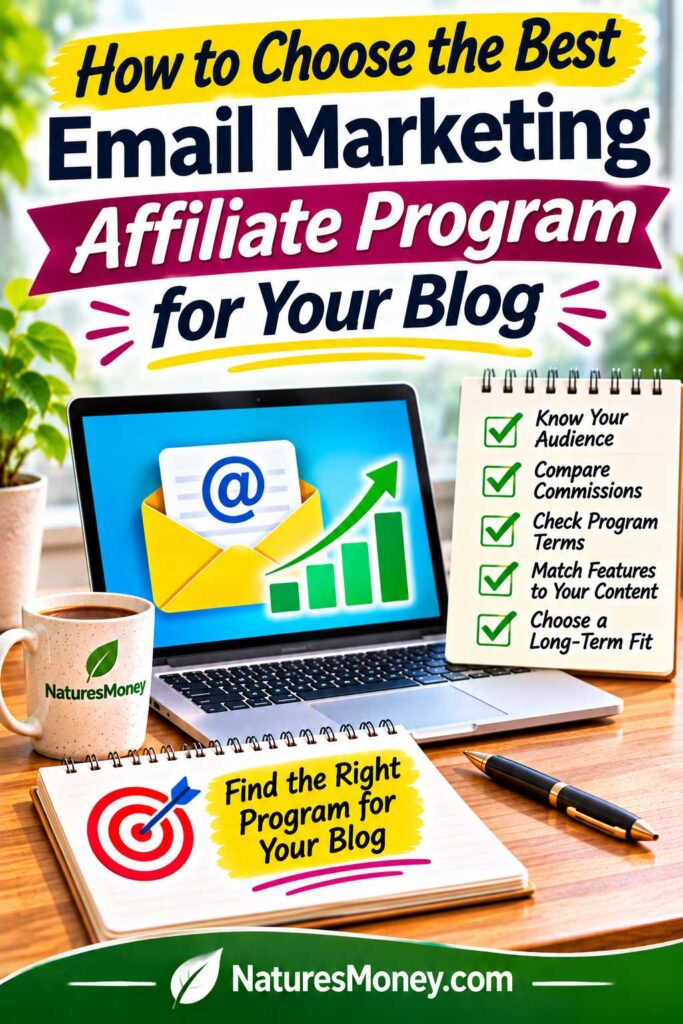
Choosing the right email marketing affiliate program involves more than finding the highest commission rate. A program offering 50% commissions might look attractive, but it won’t generate meaningful income if the software doesn’t meet your readers’ needs.
A food blogger building a weekly recipe newsletter needs different tools from an ecommerce store setting up abandoned-cart emails. Your recommendations should reflect those differences. Before joining a program, consider the following factors to determine which opportunities are worth your time.
1. Understand Your Blog’s Audience
Start by identifying who visits your website and what problems they’re trying to solve.
If your blog focuses on WordPress tutorials, beginner blogging, or online entrepreneurship, readers may be looking for affordable email marketing software that’s easy to set up.
MailerLite, Kit, and AWeber could be relevant options.
However, if your audience consists primarily of marketing professionals, agencies, or established businesses, platforms such as ActiveCampaign and HubSpot may be more appropriate.
For ecommerce-focused blogs, Omnisend offers features designed around online stores and customer purchasing behavior.
Our Recommendation: Choose affiliate programs based on your audience’s actual needs rather than the commission percentage alone.
2. Compare Commission Rates and Payment Structures
Email marketing affiliate programs use different compensation models.
Some pay recurring commissions on eligible subscription payments, while others offer fixed rewards for qualifying referrals.
When evaluating a program, look at the complete commission structure.
Consider whether commissions are recurring or one-time, how long recurring payments continue, whether commission rates change after a certain period, and what happens when customers upgrade or downgrade.
For example, a 30% lifetime recurring commission could eventually generate more income than a 50% commission limited to the first year.
However, that depends on subscription prices, customer retention, and program rules.
Don’t assume that the highest advertised percentage automatically produces the highest earnings.
3. Check Cookie Duration and Referral Tracking
Cookie duration determines how long certain affiliate tracking information remains eligible after someone clicks your referral link.
For example, a program with a 30-day cookie window may credit a qualifying purchase completed within 30 days of the initial click, depending on its attribution rules.
A longer tracking period can be helpful when readers need time to compare software before purchasing.
However, cookie duration isn’t the only factor that matters.
Some programs use additional tracking methods, account-based attribution, or rules that determine which affiliate receives credit when multiple referrals occur.
Before joining, check the program’s tracking window, attribution rules, and treatment of referrals who register for a free account before upgrading.
4. Evaluate the Software Before Recommending It
A generous affiliate commission isn’t a good reason to recommend software you don’t understand.
Whenever possible, create a free account or use a trial to explore the platform.
Pay attention to how easy it is to create an email campaign, build a signup form, manage subscribers, and configure automation.
Also examine the limitations of entry-level plans.
For example, a platform may advertise inexpensive pricing but require a more expensive subscription for the automation features your readers actually need.
If you haven’t personally tested the software, be transparent about that and base your comparison on verifiable product documentation.
5. Consider Subscription Pricing and Customer Retention
The price of email marketing software can influence both conversion rates and recurring affiliate earnings.
An affordable platform may attract more beginner customers, while a higher-priced solution may appeal to businesses with larger budgets and more advanced requirements.
However, higher subscription prices don’t automatically mean higher affiliate income.
A platform that costs $100 per month may be difficult to recommend to someone launching their first blog.
Similarly, a basic newsletter platform may not provide enough functionality for a business that needs sophisticated automation.
Focus on recommending software customers can realistically afford and continue using.
6. Review Affiliate Payment Requirements
Before investing time in promoting an affiliate program, examine how and when commissions are paid.
Important details include the minimum payout threshold, supported payment methods, payout frequency, and any waiting period before commissions become eligible.
Some programs delay payments to account for refunds, cancellations, or fraud checks.
You should also confirm whether the program accepts affiliates from your country and whether tax documentation is required.
These details can affect how quickly you receive earnings, especially when your blog is relatively new.
7. Look for Useful Affiliate Resources
Some email marketing companies provide affiliates with promotional materials, product information, tracking dashboards, and educational resources.
These can help you understand the software and monitor referral performance.
However, generic promotional banners shouldn’t replace original content.
Readers are more likely to benefit from detailed comparisons, practical tutorials, screenshots, and explanations of how a product solves a specific problem.
Use official affiliate resources to support your content while maintaining your own editorial perspective.
8. Check Promotional Restrictions and Disclosure Requirements
Every affiliate program has its own rules about acceptable promotional methods.
Some may restrict paid advertising on branded keywords, misleading discount claims, unsolicited emails, or certain uses of company trademarks.
Violating these requirements can result in rejected commissions or removal from the program.
You should also clearly disclose affiliate relationships.
For blogs targeting US readers, the Federal Trade Commission expects material connections between advertisers and endorsers to be disclosed clearly and conspicuously.
Place affiliate disclosures where readers can notice them before encountering relevant recommendations, rather than relying only on a disclosure hidden in your website footer.
9. Prioritize Long-Term Content Opportunities
A strong affiliate program should fit naturally into multiple useful articles.
For example, promoting MailerLite could support a detailed review, a MailerLite vs. Mailchimp comparison, a WordPress integration tutorial, and a beginner’s guide to creating email newsletters.
These articles can attract readers at different stages of the buying process.
A person searching for a software comparison may be close to choosing a provider, while someone reading a beginner tutorial may still be learning how email marketing works.
Both audiences can be valuable, but they require different content approaches.
How Much Can Bloggers Earn From Email Marketing Affiliate Programs?
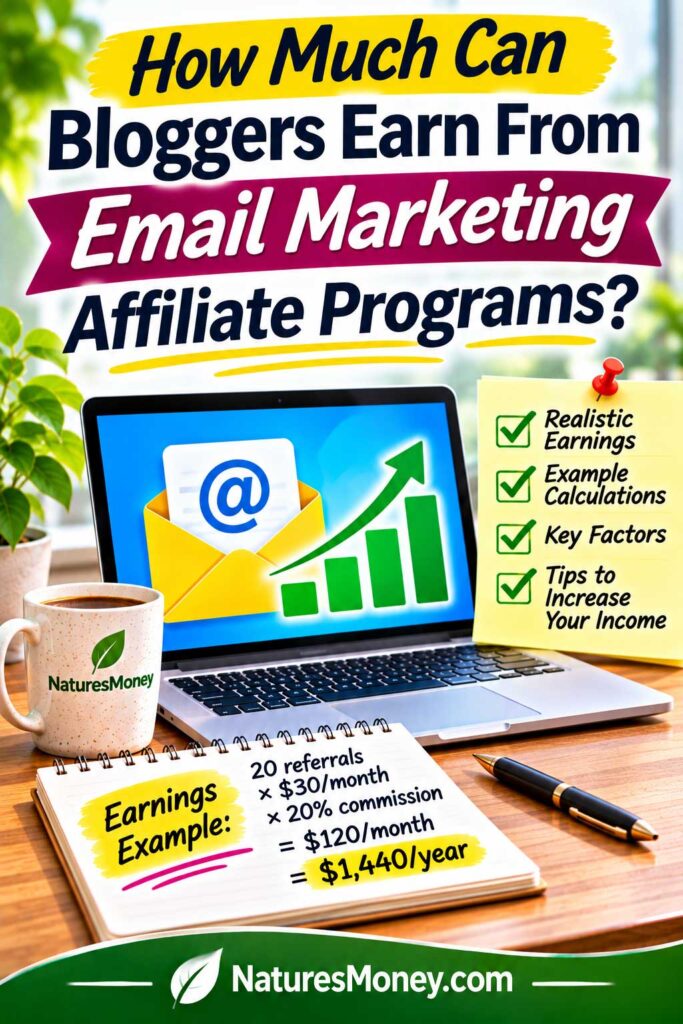
One of the biggest questions bloggers have before joining an affiliate program is how much money they can realistically earn.
The answer depends on several factors, including website traffic, audience interests, affiliate conversion rates, commission structures, and how long referred customers maintain their subscriptions.
Email marketing affiliate programs can generate anything from occasional commissions to meaningful recurring income. However, earnings are never guaranteed, and building a profitable affiliate website usually takes time.
The good news is that you don’t necessarily need hundreds of thousands of monthly visitors to generate affiliate revenue. A smaller website attracting readers who are actively researching email marketing software may have better conversion opportunities than a larger blog with less targeted traffic.
How Affiliate Earnings Are Calculated
For a program offering recurring commissions, a simple way to estimate monthly earnings is:
Active Referred Customers × Average Eligible Monthly Subscription × Commission Rate = Estimated Monthly Commission
For example, imagine you have 30 active referred customers paying an average of $40 per month for email marketing software.
If your affiliate agreement provides a 30% recurring commission, your estimated monthly earnings would be:
30 × $40 × 30% = $360 per month.
If all 30 customers remain eligible and subscribed at the same price for an entire year, that could generate $4,320 in commissions.
This example assumes the affiliate program pays recurring commissions throughout the full period. Some programs limit commission payments to a specific number of months.
Potential Affiliate Earnings at Different Customer Levels
The following table illustrates how recurring affiliate income could grow as you refer more paying customers.
For consistency, the examples assume an average eligible subscription of $40 per month and a 30% recurring commission.
| Active Paying Referrals | Potential Monthly Commission | Potential Annual Commission |
|---|---|---|
| 5 | $60 | $720 |
| 10 | $120 | $1,440 |
| 25 | $300 | $3,600 |
| 50 | $600 | $7,200 |
| 100 | $1,200 | $14,400 |
| 200 | $2,400 | $28,800 |
These are hypothetical calculations, not typical earnings or income guarantees. Annual figures assume the same number of eligible paying customers throughout all 12 months, with no cancellations, refunds, or commission changes.
In practice, recurring affiliate income fluctuates as new customers subscribe and existing customers cancel, downgrade, or reach the end of their eligible commission periods.
How Much Website Traffic Do You Need to Earn $500 per Month?
Let’s consider a blogger whose goal is to earn $500 per month from email marketing affiliate programs.
Assume the following hypothetical performance:
- Average monthly subscription: $50.
- Recurring affiliate commission: 30%.
- Commission per active paying customer: $15 per month.
- Affiliate link click-through rate: 10% of relevant article visitors.
- Paid customer conversion rate: 3% of affiliate link clicks.
At $15 per active paying customer, you would need approximately 34 active eligible referrals to generate $500 in monthly commissions.
With a 3% paid conversion rate, acquiring 34 customers would require approximately 1,134 affiliate link clicks.
At a 10% affiliate link click-through rate, that represents approximately 11,340 relevant article visits.
However, this traffic estimate describes the approximate cumulative visits needed to acquire those customers under the stated assumptions. It does not mean you must attract 11,340 visitors every month to maintain $500 in recurring commissions.
Once you have active paying referrals, your ongoing earnings depend on customer retention, new conversions, and the affiliate program’s commission duration.
Why Conversion Rates Matter More Than Traffic Alone
Two blogs receiving the same amount of traffic can generate very different affiliate earnings.
For example, a website attracting readers who search for “best email marketing software for small businesses” may reach people actively comparing products.
Another website publishing general blogging advice might attract readers who aren’t ready to purchase software.
Even if both websites receive 5,000 monthly visitors, their affiliate performance could differ considerably.
This is why commercial-intent content is valuable.
Detailed reviews, software comparisons, pricing guides, and implementation tutorials can help attract readers who are closer to making a purchasing decision.
How Long Does It Take to Make Money?
There is no reliable timeline that applies to every blogger.
A website with established search traffic and an audience interested in marketing software may generate referrals relatively quickly.
A new blog may need several months or longer to publish useful content, earn search visibility, attract relevant readers, and convert visitors into paying customers.
Search rankings, competition, content quality, audience trust, and affiliate program requirements all influence results.
Rather than expecting immediate passive income, focus on building useful content and improving it based on actual performance.
How to Increase Your Affiliate Earnings
Increasing affiliate revenue doesn’t always require publishing more articles.
Sometimes, improving existing content can produce better results.
Start by identifying articles that already attract visitors interested in email marketing software.
Review whether those articles answer important purchasing questions, explain pricing clearly, and help readers understand which platform best fits their needs.
You can also improve internal linking between tutorials, reviews, and comparison articles.
For example, a beginner’s guide to building an email list could link to a detailed MailerLite review. That review could then link to a MailerLite vs. Kit comparison for readers evaluating both platforms.
Other useful improvements include updating outdated pricing, adding original screenshots, improving page readability, and making affiliate disclosures and calls to action clear.
How to Promote Email Marketing Affiliate Programs Without a Large Audience
You don’t need a blog with thousands of daily visitors to start promoting email marketing affiliate programs. What matters more is reaching people who are genuinely interested in the software you’re recommending.
A smaller blog with helpful tutorials, detailed comparisons, and a clearly defined audience can create meaningful affiliate opportunities. However, attracting qualified visitors and earning their trust takes consistent effort.
Here are several practical ways to promote email marketing affiliate programs even if your website is relatively new.
1. Target Long-Tail Keywords With Clear Search Intent
Instead of immediately competing for broad keywords such as “best email marketing software,” focus on more specific searches that address particular problems.
For example, someone searching for “how to add a MailerLite signup form to WordPress” already has a clear goal. They may be looking for instructions, evaluating MailerLite, or preparing to use the platform.
Potential long-tail keyword opportunities include:
- Best email marketing software for beginner bloggers
- MailerLite vs. Kit for small newsletters
- How to create an email newsletter with WordPress
- Best affordable email automation tools for freelancers
- How to set up a welcome email sequence
- Email marketing software for small online stores
These topics can help you reach readers with specific needs.
However, don’t assume every long-tail keyword has low competition. Review actual search results and keyword data before choosing which articles to publish.
2. Create Detailed Software Tutorials
Tutorials are among the most natural ways to introduce affiliate products because readers are already looking for help accomplishing a task.
Instead of publishing an article that simply encourages visitors to sign up for MailerLite, explain how to use the platform.
For example, you could create a guide titled “How to Build Your First Email Newsletter With MailerLite.”
Walk readers through account setup, creating a signup form, designing a newsletter, and sending a test campaign.
Include original screenshots and explain any limitations of the free plan.
When readers understand how the software works, they can make a more informed decision about whether to use it.
3. Publish Honest Software Comparison Articles
Comparison articles can attract readers who are deciding between two or more email marketing platforms.
Examples include:
- MailerLite vs. Mailchimp
- Kit vs. MailerLite
- Brevo vs. Mailchimp
- ActiveCampaign vs. GetResponse
- Omnisend vs. Klaviyo
A useful comparison should go beyond listing features.
Explain the differences in pricing, automation, ease of use, subscriber limits, integrations, and customer support.
Most importantly, identify which types of users would benefit from each platform.
For example, MailerLite may be more suitable for a beginner seeking straightforward newsletter tools, while ActiveCampaign may be more appropriate for a business requiring advanced automation.
Honest comparisons can build trust and help readers choose software that matches their needs.
4. Use Pinterest to Attract Relevant Visitors
Pinterest can provide an additional discovery channel for bloggers publishing educational content about online business and digital marketing.
Create visually appealing pins that link to useful articles rather than sending visitors directly to affiliate offers.
For example, a pin titled “How to Start an Email Newsletter for Your Blog” could lead to a detailed tutorial on your website.
Other potential Pinterest topics include email marketing checklists, newsletter setup guides, blogging tools, and beginner marketing tutorials.
Use clear titles, relevant descriptions, and original graphics.
Avoid repetitive or misleading pins, and follow Pinterest’s current policies regarding affiliate content and spam.
Pinterest traffic isn’t guaranteed, so monitor which topics generate actual website visits and conversions.
If social media is part of your traffic strategy, our comparison of the best social media scheduling tools can help you evaluate platforms for planning and managing promotional content.
5. Build Your Own Email List
If you’re recommending email marketing software, creating your own newsletter can also help you demonstrate how these tools work.
Offer a useful resource that encourages readers to subscribe.
For example, you could provide a free checklist covering the steps required to launch an email newsletter.
After someone subscribes, send educational messages about building an audience, choosing marketing tools, and improving email campaigns.
When relevant, link to your detailed software reviews and comparisons.
Always obtain appropriate consent, provide unsubscribe options, and clearly disclose affiliate relationships when making recommendations.
A dedicated signup page can help turn website visitors into subscribers. Our guide to the best landing page builders compares tools for creating lead-generation pages without extensive coding.
Google’s campaign URL tracking guide explains how UTM parameters can help identify visits generated by newsletters and other promotional campaigns.
6. Answer Questions in Relevant Online Communities
Online communities can help you understand what potential customers struggle with.
Blogging forums, WordPress communities, and small business discussion groups often contain questions about email marketing tools.
Participate by answering questions accurately and sharing useful information.
If a community permits relevant links, you may be able to reference a tutorial you’ve written.
However, avoid posting affiliate links indiscriminately or treating communities as free advertising channels.
Building a reputation for helpful contributions is more valuable than repeatedly promoting the same software.
7. Improve Existing Blog Articles With Relevant Internal Links
If your website already publishes articles about blogging, WordPress, entrepreneurship, or digital marketing, you may not need to create entirely new content to introduce email marketing recommendations.
Look for existing articles where email marketing is directly relevant.
For example, a guide about starting a blog could link to an article explaining how to build an email list.
An article about growing website traffic could link to a guide about converting visitors into newsletter subscribers.
A small business software comparison could reference your detailed email marketing software guide.
These internal links help readers discover related information and make it easier to navigate your website.
Avoid inserting affiliate recommendations into unrelated content simply to increase the number of links.
8. Focus on Helping Readers Before Selling
One of the most common mistakes new affiliate marketers make is creating content that focuses almost entirely on earning commissions.
Readers are generally looking for answers to their questions, not advertisements.
A useful affiliate article should explain the problem, present realistic solutions, compare alternatives, and discuss potential limitations.
For example, instead of claiming that one email marketing platform is perfect for everyone, explain who should use it and who might be better served by another option.
When you explain why MailerLite might suit a beginner while ActiveCampaign is better for advanced automation, readers have a clearer reason to choose one over the other.
Where to Start
If your blog is relatively new, begin with a focused collection of five to ten useful articles rather than publishing dozens of shallow software reviews.
Combine beginner tutorials with commercially focused comparisons, and connect them through relevant internal links.
Monitor which articles attract visitors, which affiliate links receive clicks, and whether those clicks lead to qualifying conversions.
As you gather performance data, expand the topics that demonstrate genuine audience interest.
You don’t need the largest audience to build a successful affiliate strategy. You need relevant traffic, useful content, trustworthy recommendations, and a clear understanding of what your readers are trying to accomplish.
Best Content Types for Promoting Email Marketing Affiliate Programs
Not every blog post generates the same level of interest in affiliate products. Some readers are just beginning to learn about email marketing, while others are comparing specific platforms and preparing to choose a subscription.
The most effective content strategy addresses both groups.
Instead of publishing only software reviews, build a collection of helpful articles that guide readers from understanding email marketing to choosing and using the right platform.
Here are the content formats worth prioritizing when promoting email marketing affiliate programs for bloggers.
1. In-Depth Email Marketing Software Reviews
Individual software reviews are useful because they help readers evaluate a specific platform before committing to it.
A strong review should cover the software’s main features, pricing, ease of use, automation capabilities, integrations, customer support, and limitations.
For example, a MailerLite review could explain how its newsletter editor works, what is included in the free plan, and when upgrading might make sense.
Include original screenshots whenever possible, and distinguish between features you’ve personally tested and information obtained from official product documentation.
Example article: MailerLite Review: Features, Pricing, Pros and Cons
2. Head-to-Head Software Comparisons
Comparison articles can reach readers who have already narrowed their choices to two platforms.
These readers often want to understand practical differences rather than read another general overview of email marketing software.
Useful comparison topics include MailerLite vs. Kit, Brevo vs. Mailchimp, and ActiveCampaign vs. GetResponse.
Compare features using consistent criteria, including pricing, subscriber limits, automation, integrations, and ease of use.
Finish by explaining which platform is better suited to different audiences rather than declaring one universal winner.
Example article: MailerLite vs. Kit: Which Is Better for Bloggers?
3. Best Software Roundup Articles
Roundup articles introduce readers to several options within a particular category.
They work especially well when the article targets a clearly defined audience or business need.
For example, a guide to the best email marketing software for small businesses could compare beginner-friendly services, advanced automation platforms, and affordable alternatives.
Email marketing is only one part of running a business. Our roundup of the best free small business apps covers additional tools for productivity, marketing, and everyday operations.
For each platform, explain its starting price, important plan limitations, and the type of business it’s best suited for.
Avoid including software simply because it offers an affiliate program.
Example article: Best Email Marketing Software for Small Businesses in 2026
For a broader comparison of platforms, readers can explore our email marketing software guide.
4. Step-by-Step Setup Tutorials
Tutorials help readers complete a specific task and can introduce software naturally.
For example, a beginner may want to learn how to connect an email signup form to WordPress or create an automated welcome message.
A useful tutorial should provide clear instructions, relevant screenshots, and explanations of common mistakes.
Because software interfaces change, revisit these articles periodically to ensure the instructions remain accurate.
Example article: How to Create an Email Signup Form in WordPress With MailerLite
Before sending newsletters, review Google’s email sender guidelines for email authentication, unsubscribe requirements, and practices that support reliable email delivery.
5. Pricing and Free Plan Comparisons
Pricing is often one of the biggest concerns for bloggers and small business owners choosing email marketing software.
Articles focused on pricing can help readers understand what they actually receive at different subscription levels.
Explain whether costs depend on subscriber counts, email volume, additional users, or advanced features.
Also identify features that are unavailable on free plans.
Avoid presenting promotional prices as standard ongoing rates, and verify current pricing before publication.
Example article: MailerLite Pricing Explained: Free vs. Paid Plans
6. Problem-Solving Guides
Some readers aren’t searching for a specific email marketing company. They’re trying to solve a business problem.
For example, they may want to increase newsletter signups, automate customer follow-ups, or improve subscriber engagement.
These articles can introduce relevant tools after explaining the strategy.
Potential topics include:
- How to Grow an Email List From Scratch
- How to Create an Automated Welcome Email Sequence
- How to Reduce Newsletter Unsubscribes
- How to Segment Email Subscribers
- How to Improve Email Signup Conversion Rates
- How to Choose an Email Marketing Platform for a Small Business
These guides are particularly useful for attracting readers earlier in their research process.
7. Industry-Specific Email Marketing Guides
Different audiences have different email marketing needs.
A food blogger may want to send new recipes to subscribers, while an ecommerce store may need abandoned-cart automation and customer segmentation.
A nonprofit organization may prioritize newsletters, fundraising announcements, and volunteer communication.
Creating industry-specific content allows you to explain which software features matter most for a particular audience.
Example article: Best Email Marketing Software for Restaurants and Local Businesses
8. Case Studies and Real-World Experiments
Original case studies can make your content more useful because they show how a tool performs in a specific situation.
For example, you could document the process of setting up a newsletter, creating a signup form, and measuring subscriber growth over several weeks.
Explain the steps you followed, the tools you used, the costs involved, and the results you observed.
Don’t invent subscriber counts, conversion rates, or revenue figures. If an experiment doesn’t produce strong results, explaining what happened can still be valuable.
Example article: What Happened When We Tested an Email Signup Form for 30 Days
Which Content Types Should You Publish First?
For a newer affiliate website, a combination of comparison articles, tutorials, and targeted software reviews can provide a practical starting point.
Here is an example of a ten-article content plan:
| Priority | Article Topic | Primary Purpose |
|---|---|---|
| 1 | Best Email Marketing Software for Small Businesses | Main comparison guide |
| 2 | Best Free Email Marketing Software | Budget-conscious readers |
| 3 | MailerLite Review | Individual software evaluation |
| 4 | MailerLite vs. Kit | Purchase comparison |
| 5 | How to Start an Email Newsletter | Beginner education |
| 6 | How to Add an Email Signup Form to WordPress | Practical tutorial |
| 7 | Brevo Review | Small business software evaluation |
| 8 | ActiveCampaign vs. GetResponse | Advanced software comparison |
| 9 | Best Email Marketing Software for Ecommerce | Industry-specific recommendations |
| 10 | How to Create a Welcome Email Sequence | Automation tutorial |
This structure creates opportunities to connect related articles through internal links while serving readers at different stages of their research.
Our Suggested Content Strategy
Build your email marketing affiliate content around one comprehensive software comparison guide, then support it with individual reviews, head-to-head comparisons, and practical tutorials.
Prioritize topics where you can provide genuinely useful information, accurate product details, and clear recommendations.
As your website grows, use search performance and affiliate conversion data to decide which topics deserve additional coverage.
A well-connected collection of helpful articles is generally more valuable than a large number of repetitive affiliate reviews that offer little original information.
Common Mistakes to Avoid When Promoting Email Marketing Affiliate Programs
Email marketing affiliate programs can provide an additional revenue stream for bloggers, but choosing a popular product and inserting referral links into articles isn’t enough to build a successful strategy.
Many bloggers struggle because they focus too heavily on commissions, publish repetitive reviews, or recommend software without understanding their audience.
Avoiding the following mistakes can help you create more useful content, protect reader trust, and improve your chances of earning affiliate revenue over time.
1. Choosing Affiliate Programs Based Only on Commission Rates
A high commission percentage can be attractive, especially when comparing recurring affiliate programs.
However, a 50% commission doesn’t necessarily make a program more profitable than one offering 20% or 30%.
You also need to consider subscription pricing, customer retention, conversion rates, commission duration, and whether the software meets your readers’ needs.
For example, an expensive marketing automation platform may offer generous commissions but be difficult to recommend to beginner bloggers who only need a basic newsletter service.
What to do instead: Start with the tools your readers would realistically use. Then compare commissions, cookie durations, and payout requirements.
2. Recommending Software You Haven’t Properly Researched
Publishing a positive review without understanding a platform’s features and limitations can mislead readers.
Email marketing software varies considerably in automation capabilities, subscriber limits, integrations, and pricing.
Whenever possible, test the software yourself.
If you haven’t tested a platform, use its official documentation to verify pricing and features, and tell readers which parts of your review are based on research rather than personal experience.
Never claim to have personally tested a product when you haven’t.
3. Publishing Thin or Repetitive Affiliate Reviews
A short article that repeats a software company’s marketing claims is unlikely to provide much value to someone making a purchasing decision.
Readers want answers to practical questions.
Is the software easy to use? What are the limitations of the free plan? How does pricing change as an email list grows? Which alternative is better for a particular business?
A useful review should address these questions with specific explanations, balanced comparisons, and original insights where available.
What to do instead: Focus on fewer, more comprehensive articles that answer real reader questions.
4. Ignoring Search Intent
Not every visitor searching for email marketing information is ready to purchase software.
Someone searching for “what is email marketing” is likely seeking an explanation.
Someone searching for “MailerLite vs. Kit pricing” may be closer to choosing a platform.
Both searches can be valuable, but they require different content.
Trying to turn every informational article into a sales page can make your website less helpful.
Create educational guides for beginners and detailed comparisons for readers evaluating software.
Then connect related articles through relevant internal links.
5. Using Outdated Pricing and Affiliate Information
Email marketing platforms frequently adjust their plans, subscriber limits, features, and promotional offers.
Affiliate programs can also change commission percentages, eligibility requirements, tracking windows, and payment terms.
An article published several months ago may contain information that is no longer accurate.
What to do instead: Review important software comparisons and affiliate program details regularly, especially before making specific pricing or commission claims.
Use official provider documentation as the primary source for current terms.
6. Promising Unrealistic Affiliate Earnings
Claims suggesting that anyone can earn thousands of dollars in passive income within a few weeks are misleading.
Affiliate earnings depend on traffic quality, conversion rates, customer retention, commission terms, and many other factors.
Even recurring commissions can stop when customers cancel or reach the end of an eligible payment period.
When presenting income examples, explain the assumptions behind the calculations.
Clearly distinguish hypothetical scenarios from verified personal results.
7. Overloading Articles With Affiliate Links
Adding an affiliate link to every paragraph doesn’t necessarily increase conversions.
Excessive links can interrupt the reading experience and make an article feel overly promotional.
Instead, place links where they help readers take a relevant next step.
For example, a software review might include a link after the pricing discussion and another near the final recommendation.
Make the purpose of each link clear, and avoid misleading calls to action.
8. Failing to Disclose Affiliate Relationships
Affiliate disclosures are an essential part of transparent product recommendations.
If you may earn a commission when someone purchases through your link, readers should be able to understand that relationship.
For US audiences, FTC guidance calls for clear and conspicuous disclosure of material connections that could affect how readers evaluate an endorsement.
A disclosure should be easy to notice and placed close enough to the recommendation or affiliate link to be meaningful.
A disclosure hidden on a separate page may not be sufficient.
For example:
Disclosure: This article contains affiliate links. We may earn a commission if you purchase through our links, at no additional cost to you.
Use disclosure wording that accurately reflects your actual affiliate arrangements.
The FTC’s Endorsement Guides explain why bloggers should clearly disclose when they may earn commissions from product recommendations.
9. Ignoring Affiliate Program Rules
Affiliate programs may restrict certain promotional methods, including branded search advertising, unauthorized discounts, unsolicited messages, or misleading claims.
Some programs also have rules about direct linking, email promotion, and the use of company trademarks.
Failing to follow these requirements could result in rejected commissions or account termination.
Read the affiliate agreement before publishing promotional content, and check for updates when program terms change.
10. Not Tracking Which Articles Generate Results
Without performance data, it’s difficult to know whether your affiliate strategy is working.
A blog post may attract thousands of visitors but generate very few affiliate clicks.
Another article with much less traffic might attract readers who are more interested in purchasing software.
Monitor relevant metrics such as organic traffic, affiliate link clicks, click-through rates, and confirmed conversions where reporting is available.
Use Google Search Console and your analytics platform to understand how visitors find and interact with your content.
For affiliate conversions and commissions, rely on the reporting provided by each affiliate program.
Use Google Search Console to identify the search queries bringing visitors to your affiliate articles and monitor impressions, clicks, and average search positions.
Frequently Asked Questions About Email Marketing Affiliate Programs
What are the best email marketing affiliate programs for beginners?
MailerLite, Kit, and AWeber are worth considering for beginner bloggers because their products are relevant to audiences learning how to build and manage email lists. The best choice depends on your readers’ needs, the software’s features, and the affiliate program’s current commission terms.
Which email marketing affiliate programs offer recurring commissions?
MailerLite, Kit, ActiveCampaign, AWeber, and Moosend are among the platforms known for offering recurring affiliate commission opportunities. However, commission percentages and payment durations vary. Some programs pay for a limited period, while others may continue paying as long as qualifying customers remain subscribed. Always check the current affiliate agreement.
Can you make $1,000 per month promoting email marketing software?
Yes, earning $1,000 per month is mathematically possible, but it isn’t guaranteed. For example, if you earn $20 per month from each eligible paying customer, you would need 50 active referrals to generate $1,000 in monthly commissions. Actual earnings depend on conversions, customer retention, subscription prices, and affiliate terms.
Do you need a website to join an email marketing affiliate program?
Not necessarily. Some programs accept creators who promote products through newsletters, YouTube channels, or other approved platforms. However, eligibility requirements differ. A website can be particularly useful for publishing detailed reviews, tutorials, and software comparisons that attract search traffic.
Can you promote multiple email marketing affiliate programs on one blog?
Yes, provided each program permits your promotional methods. Promoting multiple platforms can help you recommend different solutions to different audiences. For example, a beginner blogger may prefer MailerLite, while a business needing advanced automation may find ActiveCampaign more suitable.
Are email marketing affiliate programs free to join?
Legitimate software affiliate programs generally do not charge an application fee. However, approval may be required, and some programs have eligibility standards. You may still incur your own expenses for hosting, content production, software testing, or marketing.
How long does it take to earn your first affiliate commission?
There is no fixed timeline. An established blog with relevant traffic may generate referrals sooner than a new website. New bloggers often need time to publish useful content, attract visitors, and build trust before earning commissions. Some programs also have payout waiting periods.
Is recurring affiliate income truly passive?
Not entirely. Existing qualifying referrals may continue generating commissions without requiring a new sale each month, but income can change when customers cancel, downgrade, or reach the end of their commission eligibility. Maintaining accurate content, monitoring affiliate links, and updating recommendations also require ongoing work.
Do free email marketing accounts generate affiliate commissions?
Not always. Many programs require a referred customer to purchase an eligible paid subscription before a commission becomes payable. Some programs may offer rewards for qualifying free registrations, but these arrangements vary. Check the program’s rules before assuming a free signup earns a commission.
Which email marketing affiliate program is best for small business bloggers?
HubSpot, ActiveCampaign, GetResponse, Brevo, and MailerLite are all worth evaluating, depending on the businesses your blog serves. HubSpot may suit readers looking for CRM and marketing tools, while MailerLite may appeal to smaller businesses seeking straightforward newsletter features. Compare current pricing, product capabilities, and affiliate terms before making a recommendation.
Do affiliate links affect Google rankings?
Affiliate links don’t automatically prevent a page from ranking in Google Search. However, Google recommends marking paid and affiliate links with rel="sponsored"; nofollow is also accepted. Affiliate articles should provide useful, original information rather than simply repeating product descriptions.
You can learn more in Google’s official outbound link guidelines.
Do you have to disclose email marketing affiliate links?
Yes, when an affiliate relationship is a material connection that could affect how readers evaluate your recommendation, it should be disclosed clearly and conspicuously. For US audiences, follow FTC endorsement guidance. Place disclosures where readers are likely to notice them, and make sure the wording accurately describes your relationship with the provider.
Our Recommendation: The Best Email Marketing Affiliate Programs for Bloggers
If you’re just getting started, MailerLite and Kit are two programs I’d put near the top of your research list. Both serve audiences that naturally overlap with blogging, newsletters, and content creation.
For a website covering small business software, ActiveCampaign and HubSpot are also worth exploring. Their tools address more complex business needs, giving you opportunities to write useful tutorials and comparisons beyond basic newsletters.
If your readers run online stores, Omnisend deserves attention. Its ecommerce features make it a more relevant choice than a general newsletter platform for certain businesses.
You don’t need to promote all ten companies. Start with two or three, learn how their products work, and create articles that answer the questions people ask before signing up.
Our recommendation: Choose programs that fit your readers first. Compare commission terms second. A useful recommendation that earns trust is a much better foundation for long-term affiliate income than chasing the highest advertised payout.
Read More: Related Guides for Bloggers and Small Business Owners
Looking for more ways to choose the right business software, grow your audience, and monetize your website? Explore these related guides from NaturesMoney.
- Best Email Marketing Software for Small Businesses — Compare email marketing platforms, features, pricing, and automation tools to find the right solution for your business.
- Best CRM Software for Small Businesses — Discover CRM platforms that help manage customer relationships, organize leads, and improve sales workflows.
- Best Free CRM Software — Explore free CRM tools for startups, freelancers, and businesses working with limited budgets.
- Best Free Small Business Apps — Find useful tools for marketing, productivity, communication, and everyday business operations.
- Best Social Media Scheduling Tools — Learn how scheduling platforms can simplify content planning and social media management.
- Best Landing Page Builders — Compare tools for creating landing pages that capture leads and encourage email newsletter signups.